
Trampoline court manufacturing is not just about producing jump beds. It’s about engineering a complete, high-load system that controls energy, protects users, and stays reliable under heavy daily traffic. A trampoline court may look simple—rectangular beds, padding, and a few surrounding features—but the quality of manufacturing determines safety performance, operating stability, and long-term profitability.
This article explains what trampoline court manufacturing includes, what matters most in production, and how to evaluate quality like an operator (not just a buyer).
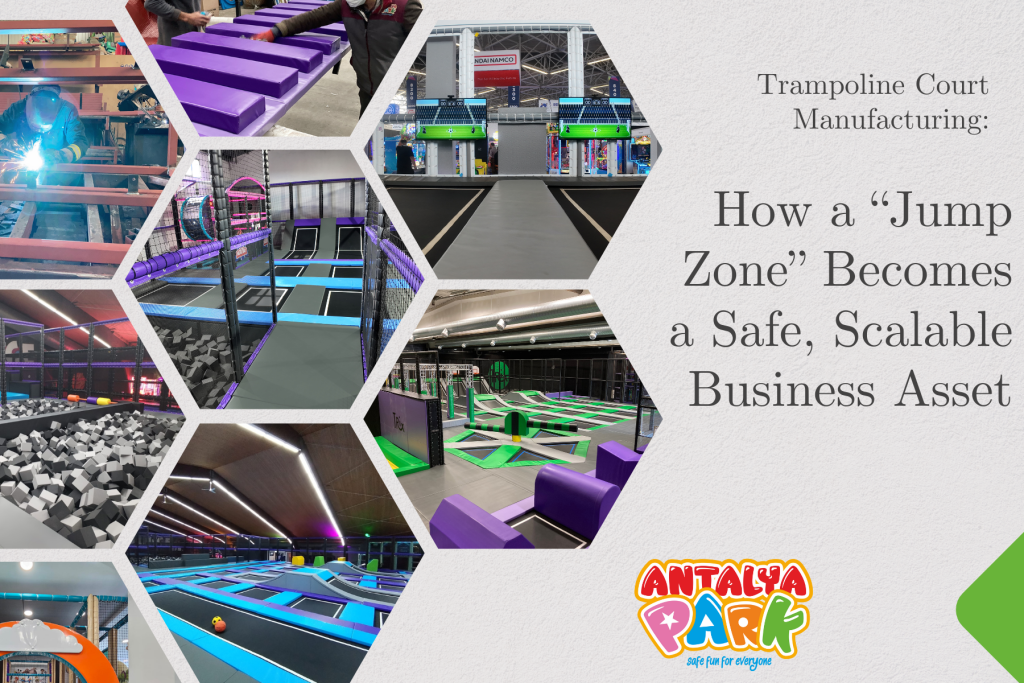
1) What Is a Trampoline Court?
A trampoline court is typically a structured jumping area made up of multiple connected beds, often installed inside:
- trampoline parks
- soft play and FEC venues
- sports and activity centers
- school or recreation facilities
Compared to a full “park concept,” a court focuses on the jumping zone itself—yet it still demands professional engineering and disciplined manufacturing.
2) What Trampoline Court Manufacturing Includes
A complete trampoline court is built from interconnected systems, including:
- Steel frame structure (load-bearing foundation)
- Jumping beds + tensioning system (springs or alternative tension systems)
- Edge and corner padding (impact protection and safe borders)
- Netting/barriers (separation where required)
- Platforms and transitions (safe movement between zones)
- Fixing and connection points designed for long-term stability
- Documentation for installation, inspections, and maintenance routines
Good manufacturing is about consistency and precision—because small weaknesses multiply under constant dynamic load.
3) Safety Engineering: The Non-Negotiable Core
A trampoline court is “physics in public.” Every jump creates dynamic force that travels through the frame, the tension system, and the borders. Strong trampoline court manufacturing focuses on:
- stable structural design and secure anchoring
- consistent bounce behavior through correct tension distribution
- impact-safe perimeter design (padding quality, edge coverage, safe gaps)
- controlled transitions that reduce missteps and collisions
- durable, non-toxic materials for public environments
- fire-resistant material options for commercial venues
- planning aligned with recognized safety approaches (EN / ASTM)
Safety isn’t a label—it’s how the court behaves after months of heavy use.
4) Durability: Where Profit Is Protected
The biggest hidden cost in trampoline operations is downtime. That’s why durability is not “nice to have”—it’s revenue protection.
High-quality trampoline court manufacturing pays attention to:
- frame stability and resistance to loosening over time
- bed and stitching quality (fatigue resistance)
- tension system performance consistency
- pad cover wear resistance (tearing + cleaning durability)
- net fixing strength and long-term tension stability
- corrosion resistance in metal components
A durable court stays tight, clean, and safe longer—reducing closures and customer complaints.
5) Installation Quality and Maintenance Readiness
A trampoline court is built twice: in the factory and on site. Manufacturing must support installation discipline through:
- clear technical drawings and labeling
- organized packaging and step-by-step installation logic
- inspection-friendly access points for daily checks
- documented maintenance routines (daily/weekly/monthly)
A well-manufactured system makes operation easier—not harder.
Conclusion
Trampoline court manufacturing is the process of turning a high-energy idea into a safe, durable, and operationally stable attraction. When engineering, materials, precision production, and support are done correctly, a trampoline court becomes more than a jump zone—it becomes a scalable business asset that drives repeat visits and performs reliably year after year.