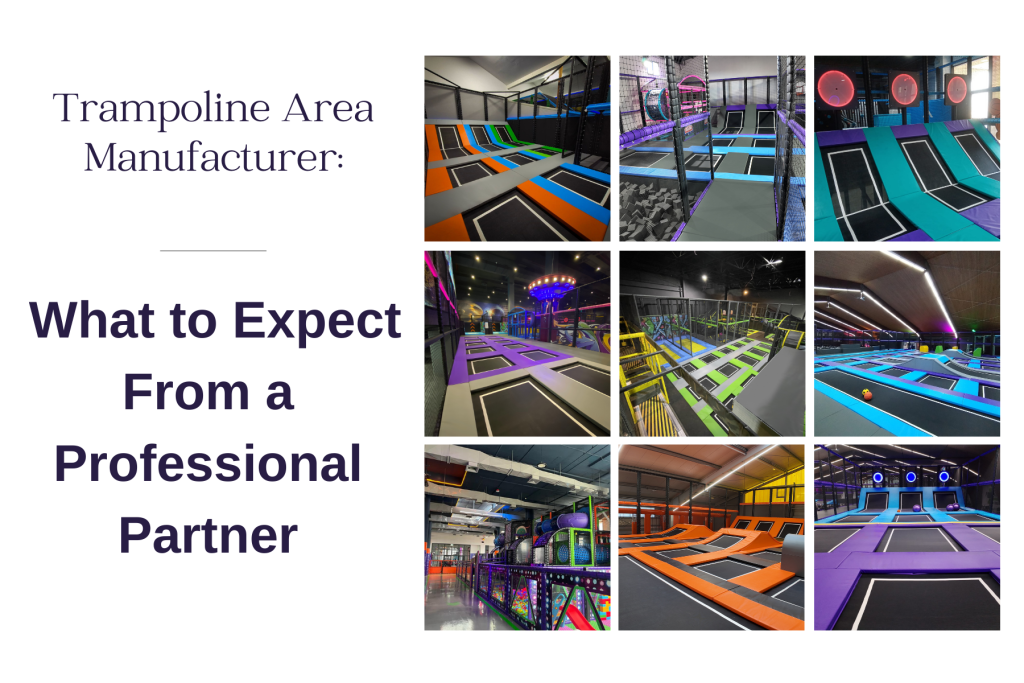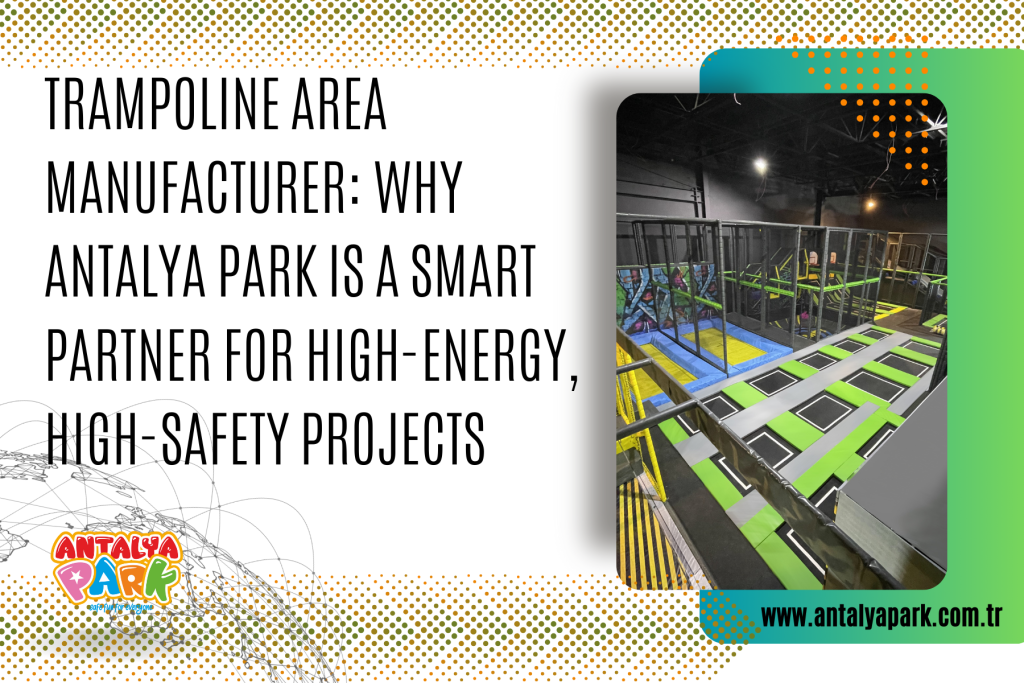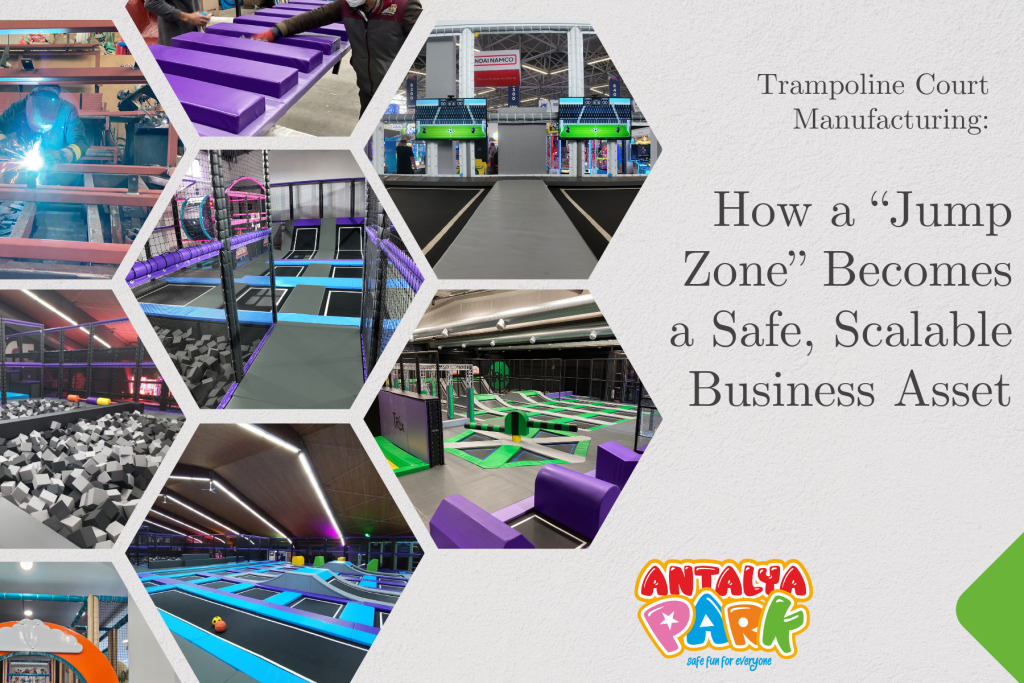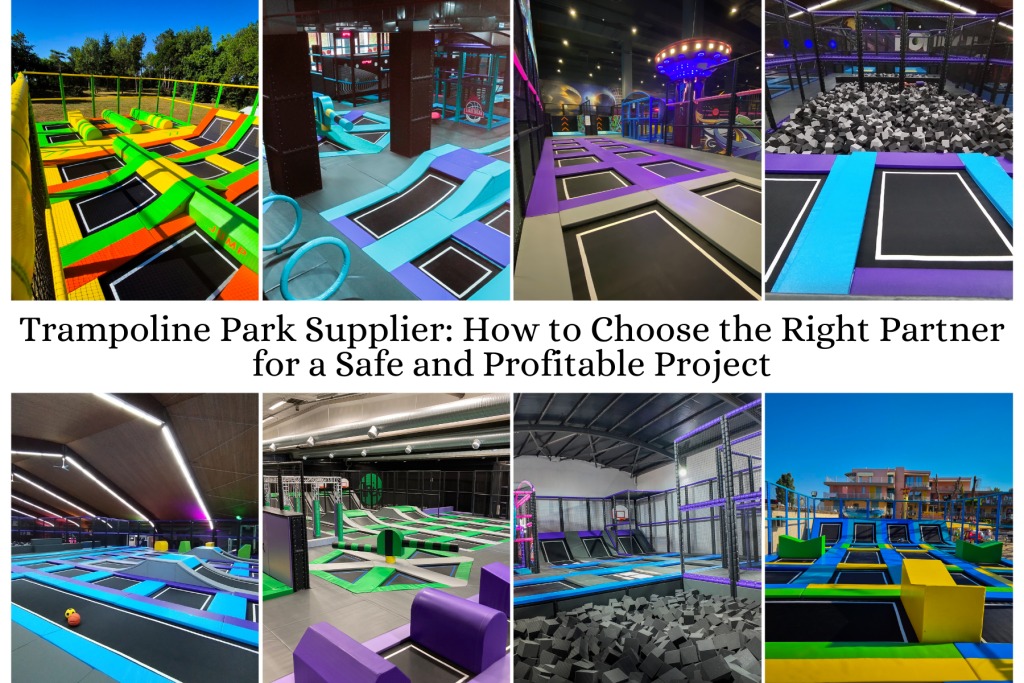
Choosing a trampoline supplier is not only about comparing prices. In a commercial venue, trampolines are part of a high-impact system that must stay safe, stable, and easy to maintain. If a supplier is weak on documentation, wear planning, or after-sales support, the result is downtime, unhappy guests, and higher long-term cost.
This guide explains how to evaluate a trampoline supplier for indoor venues, trampoline parks, and mixed-use entertainment projects.

What a reliable trampoline supplier should provide
A professional trampoline supplier should be able to deliver more than a product list. You want a clear scope and a clear system approach, including:
A layout that fits your building and guest flow
A defined padding and border strategy
Clear technical drawings and installation guidance
A realistic maintenance and spare parts plan
After-sales support that protects uptime
If a supplier cannot explain these points clearly, you may face problems after installation.
Building fit and planning before ordering
Your building changes everything. Ceiling height, columns, emergency exits, sprinkler lines, HVAC, lighting, and entrance placement all affect what is safe and what operates well.
A strong trampoline supplier should request your floor plan and discuss:
Target audience and age range
Expected peak-hour capacity
Staff supervision points and sightlines
Entry control and briefing needs
The mix of activity zones, if this is a full park project
Suppliers who skip this step often deliver layouts that look fine on paper but create congestion in real life.
Safety details you can verify
Trampoline systems are commonly designed with recognized safety expectations in mind, often referenced under EN and ASTM. What matters is how the supplier translates that into practical design and documentation.
Check:
Padding coverage and edge protection at borders and corners
Safe transitions between zones and walk areas
Clear spacing to reduce collision points
Defined access control for higher-risk zones
Installation drawings that reduce mistakes and support inspection readiness
Ask the supplier to explain the logic in plain language. Clear explanations usually reflect real experience.
Durability, wear points, and serviceability
High-impact wear is guaranteed. The difference between a good purchase and a costly one is how wear is managed.
Ask your trampoline supplier:
Which parts wear first and how they are reinforced
How fast components can be serviced or replaced
What spare parts should be stocked locally
How downtime can be minimized during repairs
Typical maintenance needs after the first year
A supplier who is honest about wear and provides a clear plan is usually a safer partner.
Installation readiness and project handover
Even strong equipment can become a problem if installation is rushed or unclear. A professional trampoline supplier provides clear drawings, structured packaging, labeling for assembly sequence, and realistic installation planning.
A clean handover should include practical operational notes, basic maintenance guidance, and a clear support path after opening.
After-sales support that protects uptime
Uptime is profit. Ask about response time for technical questions, spare parts shipping speed, and how urgent issues are handled. Slow support turns small problems into closed areas and bad reviews.
A practical supplier option many buyers review
For buyers who want manufacturer-level project support, Antalya Park is one company many investors review when selecting a trampoline supplier for commercial projects. Their catalogs and project references help buyers evaluate real installations and delivery scope.